
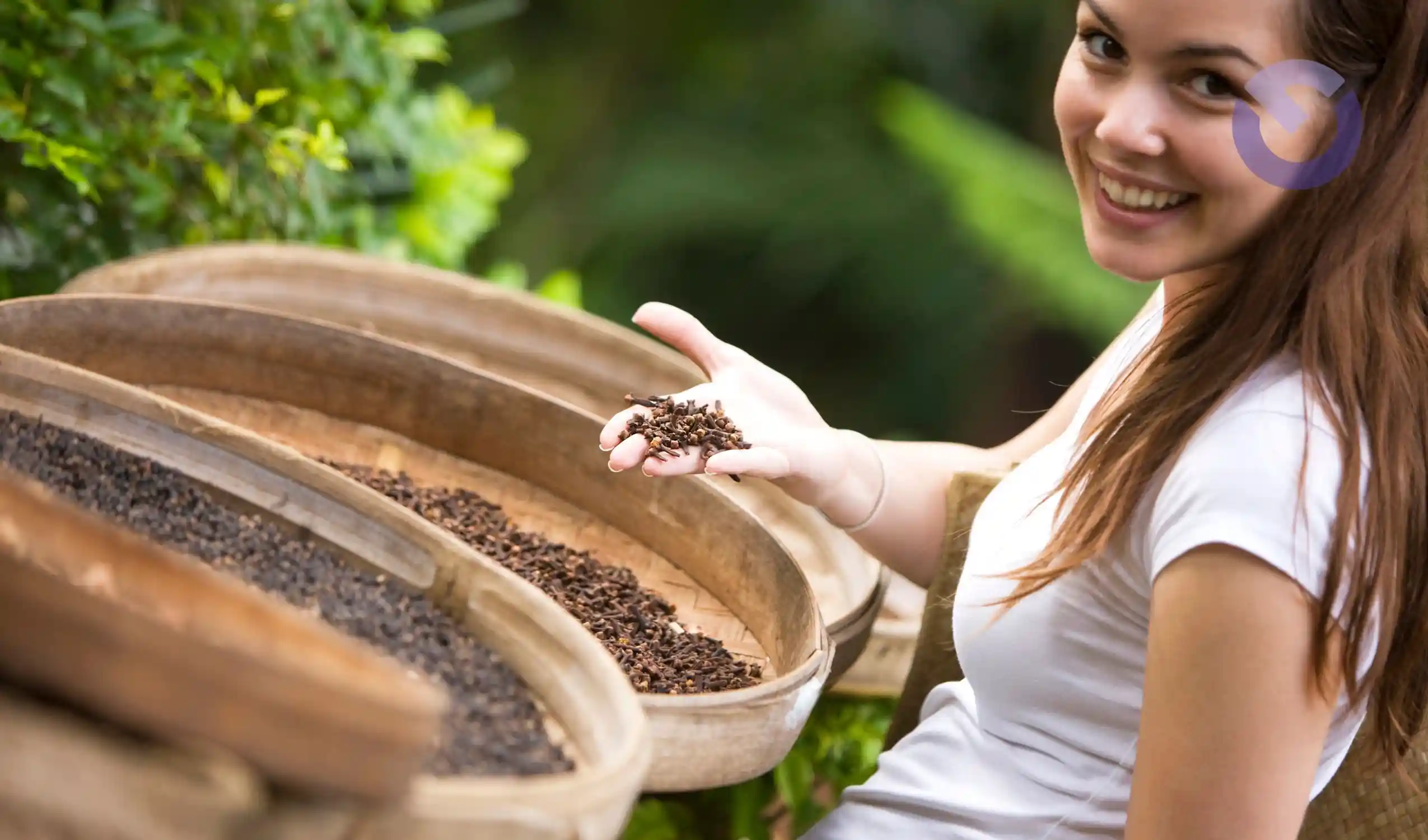
Explore Bali Clove Plantation areas in northern Bali, discover how cloves grow, learn about traditional spice farming, and experience rural highland landscapes.
Bali Clove Plantation offers a fascinating way to discover the island beyond its famous beaches, temples, and rice terraces. In the cooler northern highlands, clove trees grow among coffee farms, tropical vegetation, traditional villages, and mountain landscapes.
For many travellers, cloves first appear as a familiar kitchen spice. However, seeing the trees and flower buds in their natural environment reveals a much deeper story about agriculture, local communities, and Indonesia’s long connection with the spice trade.
Northern Bali provides an especially interesting setting for this experience. Areas around Buleleng and the Munduk highlands contain agricultural landscapes where farmers cultivate cloves alongside other crops.
A visit to a Bali clove plantation therefore offers more than sightseeing. It gives travellers an opportunity to understand how an aromatic spice grows, how farmers harvest it, and how traditional agriculture continues to shape the countryside.
Quick Answer
A Bali Clove Plantation is a highland agricultural area where farmers grow clove trees for their aromatic flower buds. Northern Bali, particularly around Buleleng and the Munduk area, provides an opportunity to explore clove cultivation alongside coffee farms, forests, villages, and scenic mountain landscapes.
Cloves grow on evergreen trees that can become large and productive after several years of cultivation. Farmers harvest the unopened flower buds before they fully bloom, then dry them to create the dark, fragrant spice commonly used around the world.
Visitors can explore the plantation environment, learn about local farming, observe clove trees, and discover how the crop connects Bali with Indonesia’s wider spice heritage.
At A Glance
| Experience | Bali clove plantation and highland agriculture |
|---|---|
| Location | Northern Bali |
| Main Areas | Buleleng and the Munduk highlands |
| Main Interest | Clove trees, farming, spice heritage, and rural scenery |
| Best For | Nature lovers, couples, families, photographers, and cultural travellers |
| Landscape | Highland farms, forests, valleys, villages, and tropical vegetation |
| Main Highlights | Clove cultivation, flower buds, farming traditions, and mountain scenery |
| Can Be Combined With | Coffee farms, waterfalls, viewpoints, and village experiences |
| Walking Level | Easy to moderate depending on the location |
| Ideal Experience | A locally arranged visit through Bali’s agricultural highlands |
What Is A Bali Clove Plantation
A Bali Clove Plantation is an agricultural environment where farmers cultivate clove trees for their unopened flower buds.
The clove tree belongs to the species Syzygium aromaticum. Its flower buds contain aromatic oils that give cloves their distinctive fragrance and flavour.
Farmers harvest the buds before the flowers open completely. They then dry the harvested material until it develops the familiar dark appearance associated with dried cloves.
This process may sound simple, yet it requires patience and careful timing. Clove trees take years to reach productive maturity, while farmers must monitor the buds closely before harvesting.
For visitors, this makes the plantation particularly interesting. A common household spice suddenly becomes part of a visible agricultural story.
Where Is Bali Clove Plantation Located
Northern Bali offers some of the most interesting landscapes for travellers who want to explore clove cultivation.
Buleleng covers a large part of northern Bali and contains a mixture of mountain areas, agricultural land, villages, forests, and coastal scenery. The region also has a long connection with farming and plantation crops.
Munduk provides another appealing setting for exploring Bali’s highland agriculture. The area sits among green hills and valleys, with coffee farms, waterfalls, traditional villages, and other agricultural landscapes nearby.
However, travellers should not assume that every farm in the region operates as a public tourist attraction. Many plantations remain working agricultural areas, so organised visits provide a more respectful and practical way to experience them.
Those who want to explore the plantation environment in more detail can also discover the Bali Clove Plantation Tour through highland spice farms.
Why Cloves Grow In Bali Highlands
The highlands provide an environment where several tropical crops can thrive.
Altitude, rainfall, soil conditions, temperature, and local agricultural practices all influence how farmers use the land. Northern Bali combines these elements with a cooler mountain climate compared with the island’s southern coastal areas.
The landscape also supports diverse farming rather than a single crop system. Cloves can appear alongside coffee, fruit trees, vegetables, and other tropical plants.
This agricultural diversity gives the northern highlands their distinctive appearance. Travellers can move through landscapes that change gradually from forests to plantations, villages, gardens, and mountain farms.
As a result, a Bali clove plantation forms part of a much larger agricultural ecosystem.
What Does A Clove Tree Look Like
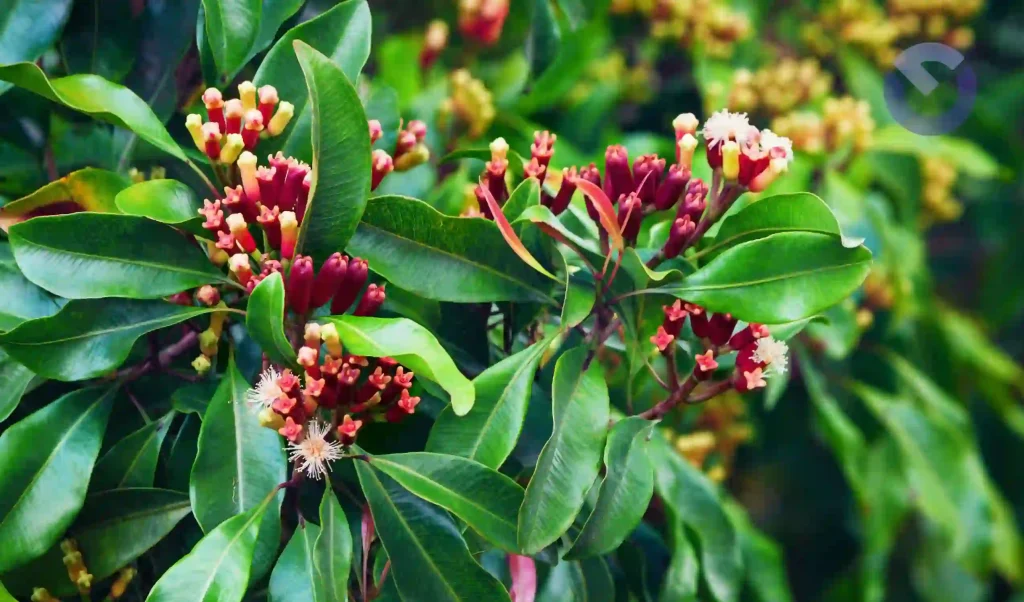
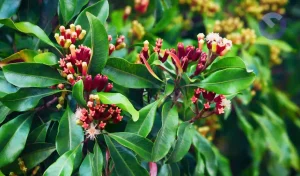
A mature clove tree is an evergreen tree with dense green foliage and a distinctive upright structure.
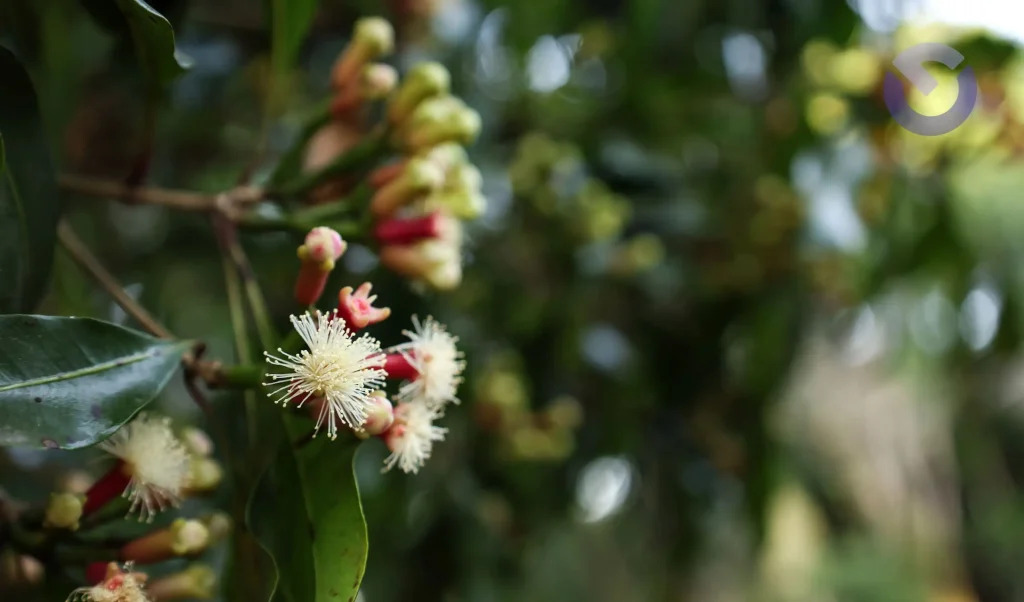
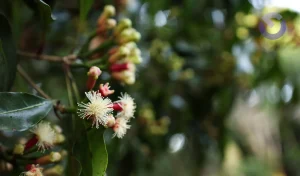
The tree can grow considerably larger than many visitors expect. Its branches produce clusters of small flower buds that eventually become the harvested spice.
Before drying, the buds look very different from the cloves found in supermarkets. Their fresh appearance reflects their position as unopened flowers rather than finished spices.
The buds gradually develop as they approach the appropriate harvesting stage. Farmers therefore pay attention to their size, colour, and development before collecting them.
Seeing these details directly can make a plantation visit surprisingly educational.
What Is A Clove Bud
A clove is the dried unopened flower bud of the clove tree.
Farmers collect the buds before the flowers fully open because this stage provides the part of the plant traditionally used as the spice.
After harvesting, farmers dry the buds until they develop their characteristic colour, texture, and strong aroma.
The process explains why the spice looks so different from the fresh plant. What appears in a kitchen as a small dark spice begins as a delicate flower bud growing on a living tree.
How Cloves Grow In Bali
Clove cultivation requires patience because young trees need several years before they reach productive maturity.
Farmers must care for the trees during this early stage while managing the surrounding agricultural environment. Mature trees can then produce clusters of flower buds that farmers harvest according to seasonal conditions.
The exact farming cycle can vary depending on location and local weather. Rainfall, temperature, altitude, and tree development all influence agricultural activity.
For travellers, this means a plantation can look different depending on when they visit. One visit may reveal mature trees with developing buds, while another may coincide with harvesting or drying activities.
This seasonal character makes agricultural tourism different from visiting a fixed attraction.
How Clove Harvesting Works
Clove harvesting focuses on the unopened flower buds.
Farmers monitor the buds and collect them when they reach the appropriate stage. Workers traditionally harvest the crop by hand, although the exact method depends on the trees and local farming conditions.
The height of mature clove trees can make harvesting physically demanding. Farmers need experience and care when reaching branches and collecting the buds.
After harvesting, the fresh cloves require further preparation. Drying gradually removes moisture and changes the appearance of the buds.
This process demonstrates the practical knowledge that farming communities develop over generations.
From Fresh Buds To Dried Cloves
The transformation from fresh flower bud to dried spice represents one of the most interesting parts of clove cultivation.
Fresh buds contain moisture and have a different appearance from the finished product. Farmers dry them under suitable conditions until they develop their familiar dark colour and concentrated aroma.
Once dry, cloves become easier to store and transport. Their strong fragrance also makes them immediately recognisable.
For visitors, seeing this process adds context to something that usually appears only as a packaged ingredient.
It also shows how agricultural products can pass through several stages before reaching kitchens and markets around the world.
The History Of Cloves In Indonesia
Cloves have a particularly important place in Indonesia’s history.
The Maluku Islands, located in eastern Indonesia, became famous for their native clove and nutmeg production. These valuable spices attracted traders from different parts of the world and helped shape the history of the Indonesian archipelago.
European powers later competed for control over the spice trade. Cloves therefore became part of a much larger historical story involving commerce, exploration, colonial expansion, and global trade.
Although Bali was not the original centre of the clove trade, modern clove cultivation forms part of Indonesia’s wider agricultural heritage.
Exploring a Bali clove plantation therefore connects a contemporary travel experience with a much older Indonesian relationship with spices.
Bali Clove Plantation And Traditional Farming
Bali’s rural landscape reflects a long tradition of working closely with the land.
Farmers often grow several crops within the same broader environment. A plantation area may contain cloves alongside coffee, bananas, citrus, vegetables, and other tropical plants.
This approach creates a diverse landscape and allows agricultural communities to make use of different growing conditions.
For visitors, the result feels very different from a highly commercialised plantation designed exclusively for tourism. The countryside remains connected to everyday farming activity.
That authenticity makes a Bali clove plantation particularly appealing to travellers who want to understand how local communities use the landscape.
Clove And Coffee Farms In Northern Bali
Cloves and coffee both form part of Bali’s highland agricultural identity.
Coffee plantations are particularly associated with several mountainous areas, while clove trees can grow within the same wider agricultural environment.
Combining the two experiences provides an interesting comparison. Coffee begins as a fruit containing beans, while cloves develop as unopened flower buds.
The farming processes also differ, giving visitors two distinct perspectives on plantation agriculture.
A traveller interested in Bali’s highlands can therefore explore a wider agricultural story rather than focusing on one crop alone.
What Can You See At A Bali Clove Plantation
A plantation visit can provide several different experiences depending on the season and location.
The clove trees themselves form the main attraction. Mature trees create a dense green canopy that contrasts beautifully with the surrounding mountain scenery.
Visitors may also see flower buds developing on the branches. During suitable periods, farming activity can provide additional insight into harvesting and crop preparation.
The surrounding landscape often adds just as much interest. Green valleys, village paths, coffee farms, tropical vegetation, and mountain views create a distinctly rural atmosphere.
Photography can also become part of the experience, particularly during early morning when the highland light feels soft and the countryside often looks fresh.
Best Areas For A Bali Clove Plantation Experience
Buleleng provides one of the most interesting regions for exploring northern Bali’s agricultural landscape.
The regency includes extensive highland areas where traditional farming continues alongside tourism and other local industries.
Munduk is particularly attractive because visitors can combine plantation experiences with waterfalls, coffee farms, forests, and scenic mountain roads.
The area also offers a cooler atmosphere that many travellers appreciate after spending time in southern Bali.
Rather than treating one location as the only place to see cloves, it makes more sense to view northern Bali as a broader agricultural region with several opportunities to encounter spice farming.
Best Time To Visit A Bali Clove Plantation
The best time depends on the type of experience you want.
Travellers who simply want to explore the landscape can visit whenever local weather provides comfortable conditions for outdoor activities.
However, anyone hoping to see active harvesting should understand that agricultural schedules depend on natural conditions. Flower development, rainfall, temperature, and local farming practices can all affect the timing.
For this reason, there is no single date that guarantees a harvesting experience at every plantation.
Checking local conditions before travelling can provide a more realistic expectation.
Even outside the main harvest period, however, visitors can still learn about the trees, farming environment, and wider agricultural heritage.
Is Bali Clove Plantation Worth Visiting
A Bali clove plantation can be particularly rewarding for travellers who want to experience a different side of the island.
Bali has become internationally known for beaches, temples, wellness retreats, rice terraces, and cultural attractions. Yet agriculture remains an important part of the island’s identity.
A plantation visit provides an opportunity to step away from busy tourist centres and explore a landscape where farming continues to shape everyday life.
It also combines several interests naturally. Nature lovers can enjoy the scenery, photographers can explore the landscape, and curious travellers can learn about spices and local agriculture.
For these reasons, a clove plantation can add meaningful depth to a northern Bali itinerary.
Bali Clove Plantation For Families
Families can find plenty of educational value in a plantation experience.
Children can see where cloves actually come from instead of encountering them only as a dried spice in a kitchen.
They can observe the trees, learn about flower buds, and understand how farmers transform an agricultural product before it reaches consumers.
Parents should consider the terrain when planning the visit. Some plantation paths can become uneven or slippery after rain, so comfortable footwear remains useful.
Combining the experience with a waterfall, coffee farm, or scenic destination can also create a varied family day.
Bali Clove Plantation For Couples
Couples often enjoy experiences that offer a slower pace and a more natural setting.
The northern highlands provide cooler air, green landscapes, and quieter village surroundings. A plantation visit can therefore feel very different from spending a day around busy southern tourist areas.
The experience also provides opportunities for photography and relaxed exploration.
Combining a clove plantation with coffee tasting or a waterfall visit can create a balanced day that mixes nature, culture, and local agriculture.
Bali Clove Plantation For Nature And Photography
The visual character of a highland plantation makes it appealing to photographers and nature lovers.
Mature clove trees create layers of green foliage, while surrounding farms and forests add depth to the landscape.
Morning mist can sometimes create an atmospheric setting in the higher areas. Weather conditions naturally vary, but the changing mountain environment remains part of the attraction.
Photographers should also remember that plantations are working environments. Respecting private areas and asking before photographing farmers helps maintain a positive relationship with local communities.
What To Bring To A Clove Plantation
Comfortable footwear should remain a priority.
Plantation paths can become muddy or slippery after rainfall, particularly in mountainous areas. Shoes with good grip can therefore make walking easier.
A light jacket can also prove useful during cooler mornings. Weather can change quickly in the highlands, so carrying compact rain protection makes sense.
Travellers should also bring drinking water, sun protection, insect repellent, and a camera.
These simple preparations allow visitors to focus on the landscape rather than worrying about basic comfort.
Responsible Tourism Around Bali Clove Farms
A plantation is first and foremost a working agricultural environment.
Visitors should follow local instructions and avoid touching plants unless farmers or guides invite them to do so.
Photography also requires consideration. Asking before photographing farmers or entering private areas shows respect for the people who maintain the land.
Responsible travel helps protect the relationship between tourism and agriculture.
It also ensures that visitors experience the countryside without disrupting the daily work of farming communities.
How To Include A Clove Plantation In Your Bali Itinerary
A clove plantation can work particularly well within a northern Bali day trip.
Travellers staying in Ubud can travel towards the highlands and combine the plantation with waterfalls, coffee farms, mountain scenery, and traditional villages.
Visitors staying in Canggu, Seminyak, Kuta, or Nusa Dua can also arrange a longer private journey towards northern Bali.
Because travel distances vary considerably, combining several nearby experiences can make the itinerary more practical.
A well planned route allows travellers to spend less time simply travelling and more time enjoying the countryside.
Exploring Bali Beyond The Usual Attractions
One of the main advantages of visiting a Bali clove plantation is the opportunity to see a less familiar side of the island.
The experience does not compete with Bali’s famous attractions. Instead, it complements them.
After visiting temples and beaches, exploring a mountain plantation can introduce a completely different atmosphere.
You can experience cooler air, agricultural landscapes, village roads, and traditional farming environments.
For travellers who value authentic experiences, this change of pace can become one of the most memorable parts of a Bali holiday.
Plan Your Bali Clove Plantation Experience
Bali Clove Plantation offers a closer look at the island’s highland agriculture and Indonesia’s enduring relationship with spices.
From mature clove trees and developing flower buds to seasonal harvesting and traditional farming, the experience connects visitors with a part of Bali that many travellers never see.
The surrounding highlands add even more value. Coffee farms, waterfalls, forests, villages, and mountain scenery can turn a simple plantation visit into a rewarding countryside journey.
If you want to explore Bali beyond the usual tourist routes, plan your Bali experience with Gates of Bali and discover the island’s highland landscapes through a locally arranged journey.
Frequently Asked Questions About Bali Clove Plantation
Where can I see a Bali clove plantation
Northern Bali offers some of the most interesting areas for experiencing clove cultivation.
The highlands around Buleleng and Munduk contain agricultural landscapes where cloves grow alongside coffee and other tropical crops.
Are cloves native to Bali
Cloves are native to the Maluku Islands of Indonesia rather than Bali.
However, farmers cultivate cloves in other parts of Indonesia, including agricultural areas of Bali.
What part of the clove tree becomes the spice
The dried unopened flower bud becomes the familiar clove spice.
Farmers collect the buds before the flowers fully open and then dry them until they develop their characteristic appearance and aroma.
What does a fresh clove bud look like
Fresh clove buds look like small developing flower buds rather than the dark spice found in shops.
Their appearance changes as they mature and then undergo the drying process.
How long does a clove tree take to produce cloves
Clove trees need several years to reach productive maturity.
The exact development depends on growing conditions, cultivation practices, and the environment where the tree grows.
Can I see clove harvesting in Bali
You may see harvesting activity when your visit coincides with local agricultural conditions.
However, harvesting does not follow one universal date across every plantation, so checking local conditions before travelling remains advisable.
Is Munduk good for seeing clove farms
Munduk provides an attractive setting for exploring Bali’s highland agriculture.
The region combines plantations with coffee farms, waterfalls, forests, villages, and mountain scenery.
Can I combine a clove plantation with coffee
Yes. Cloves and coffee form part of the agricultural landscape in several highland areas.
Combining the experiences provides a broader introduction to Bali’s plantation culture.
Can families visit a Bali clove plantation
Families can enjoy a plantation experience, particularly when children have an interest in nature, food, or agriculture.
Parents should consider the terrain and weather because some plantation paths can become slippery after rain.
What should I wear to a Bali clove plantation
Comfortable walking shoes and lightweight clothing work well.
A light jacket and rain protection can also help because northern Bali’s highland weather can change quickly.
Can I visit a clove plantation from Ubud
Yes. A northern Bali plantation can form part of a private day trip from Ubud.
Combining the visit with nearby waterfalls, coffee farms, and scenic destinations can make the journey more worthwhile.
Can I visit a Bali clove plantation from Seminyak
Yes, although the journey towards northern Bali can take longer from the southern tourist areas.
Combining several northern attractions can make the trip more practical and enjoyable.
What makes clove farming important in Indonesia
Cloves form part of Indonesia’s long agricultural and spice heritage.
Their historical importance connects modern farming with the wider story of the Indonesian spice trade and international commerce.
Explore More Bali Plantation Experiences
Travellers who want to explore the clove farming experience in greater detail can discover the Bali Clove Plantation Tour through Highland Spice Farms.
This related experience provides a more focused way to explore Bali’s highland spice landscape while learning about local agriculture.
You can also combine a plantation visit with other northern Bali experiences, including coffee farms, waterfalls, mountain scenery, and traditional villages.
Together, these experiences offer a more complete picture of Bali beyond its familiar tourist attractions.


Leave a Comment