
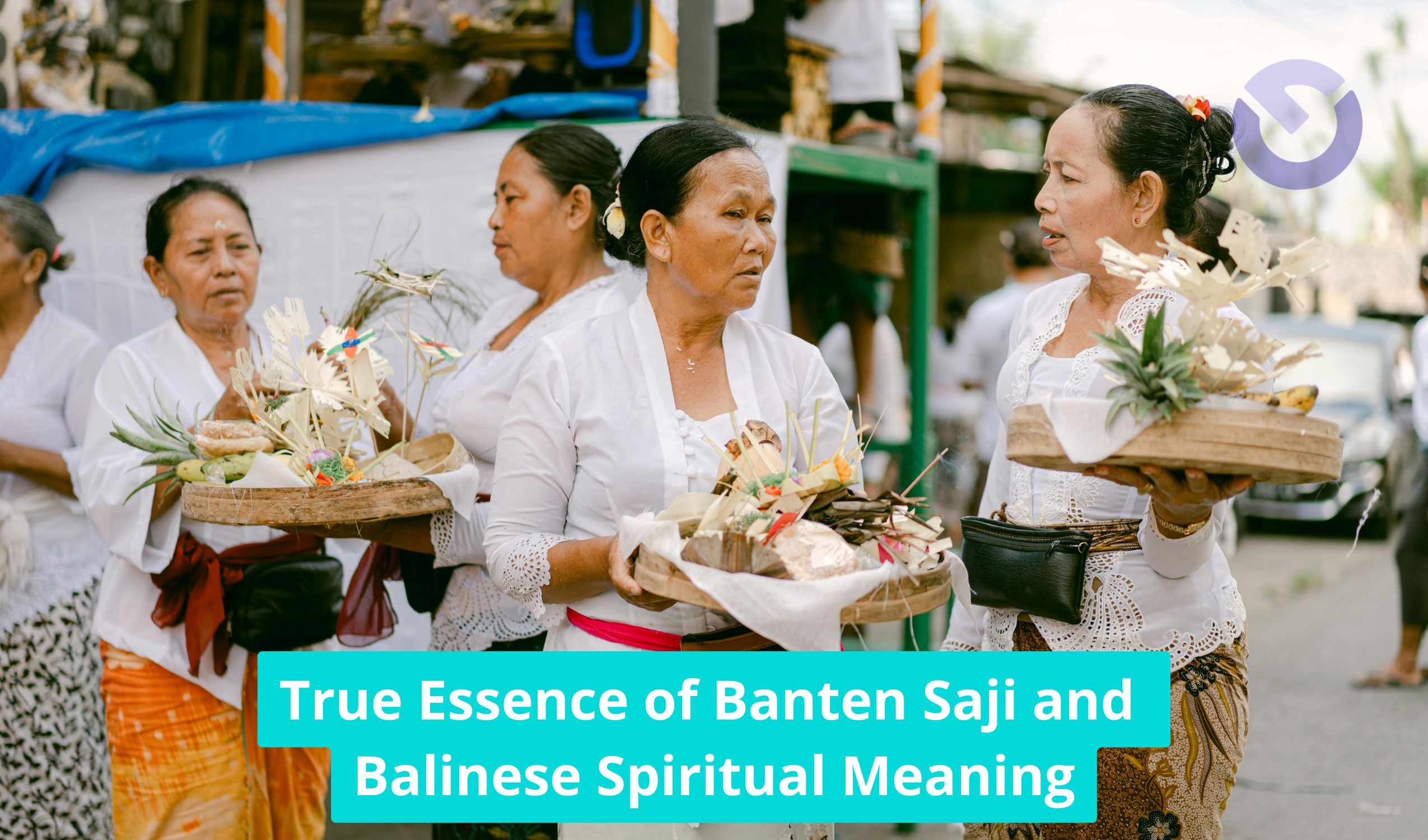
Discover the true essence of Banten Saji through Balinese sacred offerings, spiritual traditions, symbolism, and authentic cultural rituals in Bali.
True Essence of Banten Saji Through Balinese Sacred Traditions
The true essence of Banten Saji lives deeply within the spiritual heart of Bali. Beyond its beautiful arrangement of flowers, fruits, palm leaves, and incense, Banten Saji represents gratitude, harmony, devotion, and the sacred relationship between humans and the divine. Moreover, this spiritual tradition continues to shape daily Balinese life, especially in temples, homes, ceremonies, and community rituals across the island.
Visitors often notice colorful offerings placed along pathways, shrines, and sacred spaces. However, many travelers do not fully understand the deeper philosophy behind these sacred creations. In reality, the true essence of Banten Saji reflects centuries of Balinese Hindu wisdom that connects nature, spirituality, and human balance in one meaningful practice.
Today, many cultural travelers seek authentic spiritual experiences instead of ordinary sightseeing. Therefore, understanding Banten Saji offers a more meaningful connection to Balinese culture and sacred traditions.
Understanding the True Essence of Banten Saji in Balinese Culture
The true essence of Banten Saji begins with the concept of sincere offerings to the divine. In Balinese Hinduism, people create offerings as a symbol of gratitude and respect toward Ida Sang Hyang Widhi Wasa, ancestral spirits, and the natural universe. Consequently, every element inside the offering carries symbolic meaning rather than simple decoration.
The word “Banten” refers to ceremonial offerings, while “Saji” relates to the presentation of sacred items prepared with intention and devotion. Together, they form an essential part of Balinese spiritual life. Unlike modern material expressions, these offerings emphasize balance between the physical and spiritual worlds.
Balinese families prepare Banten Saji daily. Furthermore, larger ceremonies require more elaborate offerings depending on the occasion, temple ritual, or spiritual purpose. Even though the forms may vary, the philosophy remains centered on harmony, sincerity, and sacred energy.
Spiritual Meaning Behind the True Essence of Banten Saji
The spiritual depth behind the true essence of Banten Saji reflects the Balinese philosophy of Tri Hita Karana. This philosophy teaches harmony between humans, nature, and God. Therefore, offerings serve as a bridge connecting these three relationships.
Flowers symbolize purity and beauty. Meanwhile, rice represents prosperity and life itself. Fruits express gratitude for abundance, while incense carries prayers upward into the spiritual realm. Each component creates a symbolic language understood within Balinese Hindu tradition.
In addition, colors inside the offerings often correspond to spiritual directions and divine manifestations. White may symbolize purity and the eastern direction, while red represents strength and protection. These symbolic details reveal how deeply spiritual understanding shapes Balinese ceremonial life.
Rather than focusing on perfection, Balinese people value sincerity during preparation. As a result, the act of creating Banten Saji becomes a form of meditation and spiritual discipline itself.
How Banten Saji Shapes Daily Life in Bali
One remarkable aspect of the true essence of Banten Saji lies in its presence within everyday Balinese life. Unlike occasional religious practices found elsewhere, offerings remain integrated into daily routines throughout Bali.
Early in the morning, many Balinese women prepare canang sari and other small offerings before beginning daily activities. Subsequently, they place them in family shrines, businesses, motorcycles, entrances, and sacred spaces. This ritual invites balance and positive energy throughout the day.
In villages across Bali, communities also gather together to prepare ceremonial offerings before temple festivals. Consequently, these collective activities strengthen social bonds while preserving ancestral traditions.
Even younger generations continue learning these practices from parents and elders. Although Bali experiences rapid tourism growth and modernization, sacred traditions surrounding Banten Saji still remain deeply respected in many communities.
Sacred Symbolism Found Within Banten Saji
The true essence of Banten Saji becomes clearer when observing its intricate symbolism. Every arrangement follows spiritual principles passed down through generations.
Palm leaf decorations often symbolize human creativity and devotion. Meanwhile, woven coconut leaves reflect patience, discipline, and artistic expression. These handcrafted elements require skill and concentration, especially during major ceremonies.
Additionally, the circular arrangement of offerings symbolizes the cycle of life and cosmic balance. Balinese Hindu teachings emphasize that humans exist within a sacred natural order rather than separate from it.
During ceremonies such as Galungan, Kuningan, Odalan, and Ngaben, larger Banten Saji structures become increasingly elaborate. In some cases, towering offerings display extraordinary craftsmanship that combines spirituality with traditional Balinese artistry.
Because of this spiritual complexity, many cultural travelers now seek opportunities to learn directly from Balinese communities instead of simply observing ceremonies from afar.
Authentic Balinese Experiences Through Banten Saji Traditions
Travelers searching for meaningful cultural experiences often discover the true essence of Banten Saji through immersive village activities and spiritual ceremonies. Rather than participating in staged tourist attractions, visitors can witness authentic traditions still practiced naturally by local communities.
In several Balinese villages, guests may learn how to create simple offerings using flowers, palm leaves, and incense. Moreover, these experiences often include explanations about Balinese cosmology, temple etiquette, and spiritual symbolism.
Many visitors describe these moments as deeply calming and reflective. Since the process requires mindfulness and patience, creating offerings naturally encourages spiritual awareness and cultural appreciation.
Importantly, respectful participation matters greatly within Balinese culture. Therefore, visitors should dress modestly, follow local guidance, and approach ceremonies with humility and openness.
Why the True Essence of Banten Saji Attracts Conscious Travelers
Modern travelers increasingly seek authentic cultural immersion rather than crowded tourist experiences. Consequently, the true essence of Banten Saji resonates strongly with people searching for spiritual depth, mindfulness, and meaningful human connection.
Bali continues attracting visitors interested in wellness, spirituality, yoga, healing traditions, and sacred ceremonies. However, understanding local traditions respectfully creates a more genuine experience beyond surface level tourism.
Banten Saji teaches valuable lessons about gratitude, simplicity, and balance. Furthermore, the practice reminds people to slow down and reconnect with intention in daily life. These values feel especially relevant in today’s fast moving digital world.
Because of this, authentic Balinese cultural immersion experiences continue gaining international attention among travelers who appreciate spirituality, traditional wisdom, and local heritage.
The Connection Between Nature and the True Essence of Banten Saji
Nature plays a central role within the true essence of Banten Saji. Most offering materials come directly from the surrounding environment, including flowers, leaves, fruits, bamboo, and natural fibers.
This connection reflects the Balinese belief that humans should live harmoniously with nature rather than dominate it. Consequently, offerings become expressions of gratitude for the earth’s abundance and spiritual energy.
Traditional Balinese communities carefully preserve these relationships through rituals, temple ceremonies, and agricultural traditions. In many villages, sacred mountains, rivers, and forests still hold spiritual significance connected to ancestral beliefs.
Additionally, seasonal ceremonies often align with agricultural cycles and natural rhythms. This spiritual connection between humans and the environment continues shaping Balinese identity today.
For visitors, understanding this relationship offers deeper appreciation for Bali beyond beaches and resorts. Instead, it reveals an island where spirituality and nature remain closely intertwined.
Cultural Preservation and Modern Challenges
Although the true essence of Banten Saji remains strong, modernization presents ongoing challenges for traditional communities. Tourism growth, urban development, and changing lifestyles sometimes reduce opportunities for younger generations to fully learn ceremonial traditions.
Nevertheless, many Balinese families actively preserve their cultural heritage through temple participation, traditional education, and community ceremonies. Local cultural organizations also encourage younger generations to continue practicing sacred arts and rituals.
Moreover, authentic cultural tourism can support preservation when approached respectfully. Travelers who participate responsibly help create appreciation for Balinese traditions rather than reducing them into commercial performances.
Therefore, meaningful cultural immersion experiences benefit both visitors and local communities when they prioritize education, respect, and genuine human connection.
Experiencing the True Essence of Banten Saji Respectfully
Visitors interested in experiencing the true essence of Banten Saji should approach Balinese traditions with curiosity and respect. Instead of treating ceremonies as entertainment, travelers should understand that these rituals carry profound spiritual significance for local communities.
Before entering temples or participating in ceremonies, guests usually wear a sarong and sash as a sign of respect. Additionally, guides often explain proper etiquette regarding photography, behavior, and sacred spaces.
Learning directly from local Balinese practitioners creates a more authentic and meaningful experience. Furthermore, it allows travelers to appreciate the emotional and spiritual value behind each ritual practice.
Many cultural immersion experiences also include traditional cooking, temple visits, storytelling, and spiritual discussions that deepen understanding of Balinese life.
If you wish to explore the spiritual traditions of Bali more deeply, you may also enjoy reading about authentic Balinese purification rituals, temple ceremonies, and traditional village life connected to sacred cultural practices.
True Essence of Banten Saji in Modern Spiritual Tourism
Spiritual tourism in Bali continues evolving as travelers seek experiences rooted in authenticity and cultural understanding. Consequently, the true essence of Banten Saji now attracts visitors from around the world who value mindfulness and sacred traditions.
Unlike commercial entertainment, genuine cultural immersion focuses on human connection, learning, and respectful participation. Therefore, many travelers now choose smaller experiences guided by local communities instead of mass tourism activities.
This shift creates opportunities for Balinese traditions to remain appreciated internationally while preserving their sacred meaning locally. At the same time, responsible tourism encourages cultural exchange built on mutual respect rather than superficial consumption.
As Bali moves forward within a global tourism industry, traditions like Banten Saji continue reminding people about balance, gratitude, and spiritual awareness.
FAQ About the True Essence of Banten Saji
What is the true essence of Banten Saji
The true essence of Banten Saji reflects gratitude, spiritual harmony, and devotion within Balinese Hindu culture. These sacred offerings symbolize the connection between humans, nature, ancestors, and the divine.
Why is Banten Saji important in Bali
Banten Saji plays an essential role in daily spiritual life and religious ceremonies throughout Bali. Moreover, it preserves cultural identity and traditional Balinese philosophy across generations.
What materials are commonly used in Banten Saji
Traditional offerings often include flowers, rice, fruits, coconut leaves, incense, and natural materials gathered from the environment. Each item carries symbolic spiritual meaning.
Can visitors learn how to make Banten Saji
Yes. Many authentic cultural immersion experiences allow visitors to learn directly from local Balinese communities while understanding the spiritual significance behind the offerings.
Is Banten Saji connected to Balinese Hinduism
Yes. Banten Saji forms an important part of Balinese Hindu religious practices and ceremonial traditions throughout the island.
Discover Authentic Balinese Cultural Immersion
Experiencing the true essence of Banten Saji offers far more than cultural observation. Instead, it opens a deeper understanding of Balinese spirituality, sacred traditions, and daily life rooted in harmony and gratitude.
For travelers seeking authentic cultural connection in Bali, immersive experiences with local communities create unforgettable memories beyond ordinary tourism. Explore sacred traditions, spiritual rituals, and meaningful Balinese heritage through a carefully guided cultural journey.
Visit Authentic Balinese Cultural Immersion Experience to discover a deeper side of Bali through genuine local traditions and spiritual experiences.





Leave a Comment